Reject Poverty by Its Roots: Speak to the Desired End Result
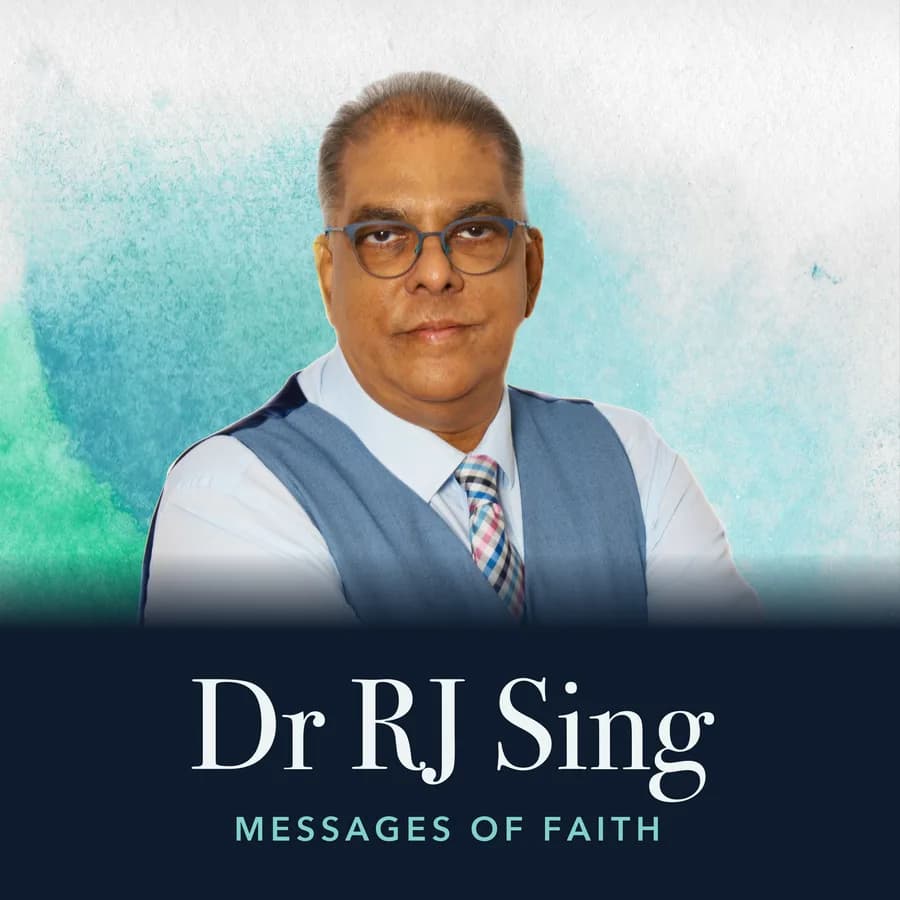
Dr RJ Sing, 32 min, Part 5 of What Faith Is
Originally recorded as “What Faith Is, Part 5”
Sermon outline
God is a God of increase who wants his people free from poverty, and faith is the servant you put to work by saying what you desire and speaking to your mountain.
Main text
- Mark 11:23-24
Opening
He welcomes the church family and everyone else watching from FCI, Rhema Durban, and says, 'For the last several weeks, we have been talking about it. And we will continue this morning about talking on the subject of faith.' He reads Mark 11:23-24 as his foundational scripture. Then, as in the last few programmes, he defines more of the words he will be using, so that viewers who have never heard them will understand them in context: this morning the feasts, the year of Jubilee, the altar, money, wealth and poverty.
More words to understand: the feasts and the year of Jubilee
The feasts were part of God's covenant with Israel, kept from year to year because God knew that man has the potential to forget his provision. The year of Jubilee, every fiftieth year, was a time of release, freedom and restoration: slaves were set free, debts were forgiven and property went back to its owners. He presents it as a type of God's release from the enemy's bondage, debt included, and insists that God has been a blesser from the beginning and did not create poverty, disease or affliction.
“It is God's will for you to prosper. Let that not be a debate in your mind.”
- Leviticus 25:8-13
- Genesis 1:28
The altar: a holy meeting place
On Mount Sinai God gave Moses directions for two altars, and the altar was sanctified, anointed with oil and considered holy. The altars at which we worship and give our tithes and offerings must be holy too, because unholiness at a personal altar or at the altar of a church or ministry will block God's blessing. He treats the place where the preacher stands as a holy place and is careful about who stands there, because he wants God's presence in every service.
Illustration: When you are born you are dedicated at the altar, when you marry you are married at the altar, and when you 'graduate from this earth' you graduate at the altar. Your tithes and offerings are given there too.
“The altar was a meeting place where God spoke to man and he responded.”
Money and wealth: the kingdom's perspective
Your money represents you: your time, your talents and abilities and your hard work, and it can be the means of a blessing or a curse. There is a world's perspective of money and a kingdom perspective. Believers are in this world but not of it, and the kingdom of God runs on its own economics. God is the source of wealth: he gives the power to get it and the ability to enjoy it, which the riches of this world cannot do because they so often bring pain and sorrow.
Illustration: He answers the criticism of ministers who are blessed: before criticising them, ask how much of that money they give away. He says they give millions to charitable organisations, set up Bible schools and pay the salaries of missionaries.
“Not only does He give you the power to get wealth, He gives you the ability to enjoy wealth.”
- John 17:16
- Deuteronomy 8:18
Poverty is not your portion
Poverty is bondage. It keeps people from the things they need and brings depression and fear, and it is not God's will for anyone to stay in it. God is a lifter of humanity, and now is the time for him to break debt and poverty off his people so that the church can meet needs on a large scale. He encourages preachers who have gone quiet about money because of criticism, and says he has made a vow to God that he will never preach poverty, however hostile the criticism gets.
Illustration: He grew up very poor, watching the children who were better off and thinking life was unfair. What built up in him was a hatred of poverty, and as a Hindu boy, not yet a Christian, he made up his mind that he would never be impoverished. He borrows Creflo Dollar's line: 'we were so poor, the poor called us poor.'
“So poverty is not your portion. Don't accept it. You've got to reject it.”
- Luke 4:18
Giving your way out of trouble
The seed you plant into the kingdom of God is always your way out of trouble. The widow of Zarephath used her seed to create a harvest in the middle of a famine. Whatever God has placed in your hand is always enough to get you out.
Illustration: The widow of Zarephath, who sowed in a famine and reaped a harvest.
“Your seed is always your bridge out of trouble.”
- 1 Kings 17:8-16
The Bible is a book about doing business with God and with man
Coming back to Mark 11:23-24, he repeats what he has said in the weeks past. The Bible is a spiritual book, but it does nothing collecting dust at your bedside to ward off demons and curses. You have to read it, study it, highlight it, write in it and meditate on it, and then faith comes. It is not a book that helps you endure but a book that helps you make decisions that create changes, and the more you study it the more wisdom you learn for dealing with God and with people.
Illustration: A Bible kept next to the bed gathering dust, as though that alone would keep the curses away.
“The Bible is a book that helps you to make decisions that create changes.”
- Mark 11:23-24
- Proverbs 4:7
Faith is the servant of the believer
He reads the mustard seed and the servant coming in from the field. When the disciples asked Jesus to increase their faith, his answer was to use what they had, because a servant is expected to do his work. Put the little faith you have to work and it will grow.
Illustration: The servant who comes in from ploughing and is told to prepare his master's supper before he eats himself.
“If you use the little faith that you have your faith will grow and you will grow in your faith.”
- Luke 17:6-10
Faith is the substance of what is desired
We often ask for things we cannot physically see, and as the days and weeks pass what we asked for in faith comes into manifestation, because God is a good God who gives us the desires of our heart. He tells saved and unsaved viewers alike that God loves them just as they are. Faith is the heavenly substance of what you desire, so stop rehearsing what you do not want. Without faith it is impossible to please God, and God takes pleasure in the prosperity of his servant.
Illustration: God 'stands in the grandstands' and takes tremendous pleasure in watching you prosper.
“If you don't want it don't say it.”
- Hebrews 10:34
- Hebrews 11:1
- Psalm 37:4
- Hebrews 11:6
- Psalm 35:27
Speak to the mountain and to the natural world
Whatever mountain is facing you, you can speak to it and the circumstances will change. Jesus rebuked the wind and told the waves to be still, which shows that even natural things can be spoken to and changed in his name. Exercise authority over the natural world as a man or woman of faith, free from fear and more than a conqueror, and let the weak say, I am strong.
Illustration: Jesus standing up in the boat, rebuking the wind and saying to the waves, 'Quiet, be still', and everything becoming completely calm.
“Learn to speak to the desired end result.”
- Mark 11:22-24
- Psalm 35:27
- Mark 4:39
- Luke 17:5-6
- Joel 3:10
Putting it into practice
- Settle it that God wants you to prosper, and be careful whose words you let into your heart.
- Keep your own altar and your giving holy.
- Refuse poverty, and sow a seed when you are in trouble.
- Read, study, highlight and meditate on your Bible instead of leaving it at your bedside.
- Stop rehearsing what you do not want, and speak to your mountain.
Closing
He says they will pick it up next week, then asks viewers to raise a hand, touch the television screen or lay a hand across the chest while he prays the prayer of agreement over every need, whether finances, healing, a relationship or a job, and asks God to send his angels to bring the answer. He calls the series an adventure of faith, blesses their homes, families and businesses, and tells them to apply the blood of Jesus over their homes and lives so that no virus or plague comes near them.
Declarations he led
- I can do whatever the word of God says I can do.
In his words
- “It is God's will for you to prosper. Let that not be a debate in your mind.”
- “I will reject poverty by its roots. I'll never tolerate it.”
- “Your seed is always your bridge out of trouble.”
- “The Bible is about doing business with God and with man.”
- “Learn to speak to the desired end result.”
Every scripture in this message
- Mark 11:23-24
- Leviticus 25:8-13
- Genesis 1:28
- John 17:16
- Deuteronomy 8:18
- Luke 4:18
- 1 Kings 17:8-16
- Proverbs 4:7
- Luke 17:6-10
- Hebrews 10:34
- Hebrews 11:1
- Psalm 37:4
- Hebrews 11:6
- Psalm 35:27
- Mark 11:22-24
- Mark 4:39
- Luke 17:5-6
- Joel 3:10